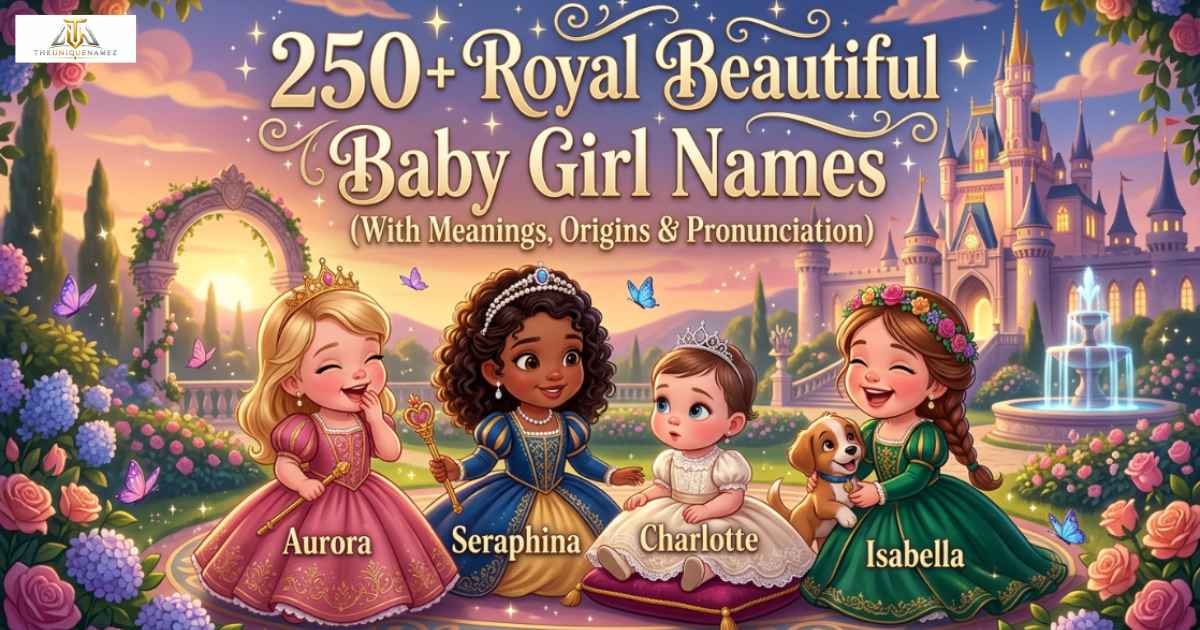
250+ Royal Beautiful Baby Girl Names (With Meanings, Origins & Pronunciation)
Choosing a royal beautiful baby girl names is a meaningful way to give your daughter a name that reflects elegance, strength, and timeless charm. Royal-inspired names have remained popular for generations because they carry rich histories, graceful meanings, and a classic appeal that never goes out of style.
In this collection, you’ll discover 250+ beautiful royal baby girl names, carefully organized with their pronunciation, origin, and meaning. Whether you’re inspired by queens, princesses, or noble traditions, these names will help you find the perfect choice for your little one.
What Makes a Baby Girl Name “Royal”?
A name earns royal status in one of three ways: it was worn by an actual queen, empress, or princess in recorded history; it derives from a word or root that literally means “queen,” “princess,” “noble,” or “ruler”; or it belongs to a goddess or mythological figure associated with a royal court or divine kingdom.
Understanding which category a name falls into helps you choose one that fits your intention whether you want a direct historical tribute like Victoria (note: link to your site’s “V” names page), or a name whose royal meaning is more subtle, like Malka or Regina.
Royal names have appeared at the top of official birth registries for centuries. Charlotte (note: link to your site’s British royal names page), for example, jumped in popularity in the U.S., UK, and Australia after Princess Charlotte of Cambridge’s birth in 2015 a pattern naming researchers call the “royal baby effect,” where a high-profile royal birth measurably shifts national naming trends for several years afterward.
British & European Royal Family Names
The British and European monarchies have supplied English-speaking parents with royal name inspiration for centuries. These Royal Beautiful Baby Girl Names tend to feel classic, established, and easy to pronounce in most Western countries, which is part of why they consistently rank among the most popular girl names overall.
Many carry the added weight of being borne by multiple queens across different eras, layering historical depth onto an already elegant sound.
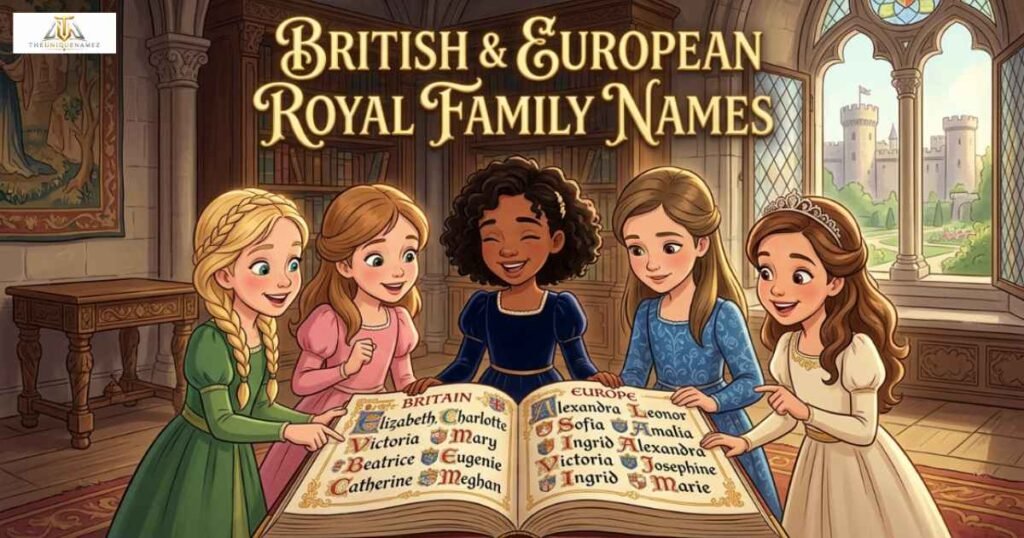
What is the most royal baby girl name? By most naming-authority measures, Elizabeth holds that title it has been worn by two reigning English/British queens spanning over 500 combined years of history, plus countless European princesses and noblewomen. Names like Victoria, Charlotte, and Alexandra follow closely behind, each tied to major monarchs or beloved modern royals.
- Elizabeth — Pronunciation: eh-LIZ-uh-beth | Origin: Hebrew | Meaning: “Pledged to God”; borne by Elizabeth I and Elizabeth II
- Victoria — Pronunciation: vik-TOR-ee-uh | Origin: Latin | Meaning: “Victory”; Queen Victoria of the United Kingdom
- Charlotte — Pronunciation: SHAR-lut | Origin: French/German | Meaning: “Free woman”; Princess Charlotte of Wales
- Alexandra — Pronunciation: al-eg-ZAN-druh | Origin: Greek | Meaning: “Defender of the people”
- Anne — Pronunciation: ann | Origin: Hebrew | Meaning: “Grace, favor”; Queen Anne of Great Britain
- Mary — Pronunciation: MAIR-ee | Origin: Hebrew | Meaning: “Beloved, wished-for child”; Mary I and Mary II
- Diana — Pronunciation: dye-AN-uh | Origin: Latin | Meaning: “Divine, heavenly”; Princess Diana of Wales
- Sophie — Pronunciation: SO-fee | Origin: Greek | Meaning: “Wisdom”; Sophie, Duchess of Edinburgh
- Beatrice — Pronunciation: BEE-uh-tris | Origin: Latin | Meaning: “She who brings happiness”; Princess Beatrice of York
- Eugenie — Pronunciation: yoo-JEE-nee | Origin: Greek | Meaning: “Well-born, noble”; Princess Eugenie of York
- Louise — Pronunciation: loo-EEZ | Origin: French | Meaning: “Renowned warrior”
- Matilda — Pronunciation: muh-TIL-duh | Origin: Germanic | Meaning: “Mighty in battle”; Empress Matilda of England
- Adelaide — Pronunciation: AD-uh-layd | Origin: Germanic | Meaning: “Noble kind”; Queen Adelaide of Saxe-Meiningen
- Augusta — Pronunciation: uh-GUS-tuh | Origin: Latin | Meaning: “Majestic, venerable”
- Beatrix — Pronunciation: BEE-uh-triks | Origin: Latin | Meaning: “Voyager, blessed”; Queen Beatrix of the Netherlands
- Camilla — Pronunciation: kuh-MIL-uh | Origin: Latin | Meaning: “Attendant at a religious service”; Queen Camilla
- Catherine — Pronunciation: KATH-rin | Origin: Greek | Meaning: “Pure”; multiple English queens, Catherine, Princess of Wales
- Cecily — Pronunciation: SESS-uh-lee | Origin: Latin | Meaning: “Blind to one’s own beauty”
- Charlene — Pronunciation: shar-LEEN | Origin: French | Meaning: Feminine of Charles; Princess Charlene of Monaco
- Claudia — Pronunciation: KLAW-dee-uh | Origin: Latin | Meaning: “Lame, weak” (used traditionally despite its historical meaning)
- Cordelia — Pronunciation: kor-DEEL-yuh | Origin: Celtic | Meaning: “Daughter of the sea”; a Shakespearean princess
- Eleanor — Pronunciation: EL-uh-nor | Origin: Occitan/Greek | Meaning: “Shining light”; Eleanor of Aquitaine
- Estelle — Pronunciation: es-TEL | Origin: French | Meaning: “Star”; Princess Estelle of Sweden
- Frederica — Pronunciation: fred-er-EE-kuh | Origin: Germanic | Meaning: “Peaceful ruler”
- Gabriella — Pronunciation: gab-ree-EL-uh | Origin: Hebrew | Meaning: “God is my strength”; Princess Gabriella of Monaco
- Helena — Pronunciation: heh-LAY-nuh | Origin: Greek | Meaning: “Bright, shining light”; several European royal Helenas
- Ingrid — Pronunciation: ING-grid | Origin: Norse | Meaning: “Beautiful goddess”; Queen Ingrid of Denmark
- Isabella — Pronunciation: iz-uh-BEL-uh | Origin: Spanish/Hebrew | Meaning: “Devoted to God”; Isabella I of Castile
- Josephine — Pronunciation: JOE-zeh-feen | Origin: French | Meaning: “God will add”; Empress Josephine of France
- Leonor — Pronunciation: lay-oh-NOR | Origin: Spanish | Meaning: “Light”; Leonor, Princess of Asturias
- Margaret — Pronunciation: MAR-guh-rit | Origin: Greek | Meaning: “Pearl”; Princess Margaret of the United Kingdom
Names That Mean “Queen” Across World Languages
These Royal Beautiful Baby Girl Names carry the beautiful meaning of “queen,” “royal,” or “ruler” in different cultures and languages around the world.
- Regina — Pronunciation: reh-JEE-nuh | Origin: Latin | Meaning: “Queen”
- Malka — Pronunciation: MAHL-kah | Origin: Hebrew | Meaning: “Queen”
- Sarai — Pronunciation: sah-RYE | Origin: Hebrew | Meaning: “Princess, noblewoman”
- Malika — Pronunciation: mah-LEE-kah | Origin: Arabic | Meaning: “Queen”
- Kira — Pronunciation: KEER-uh | Origin: Slavic | Meaning: “Lady, ruler”
- Kirana — Pronunciation: kee-RAH-nah | Origin: Sanskrit | Meaning: “Ray of light, associated with royal radiance”
- Rani — Pronunciation: RAH-nee | Origin: Sanskrit/Hindi | Meaning: “Queen”
- Raina — Pronunciation: RAY-nuh | Origin: Slavic/Latin | Meaning: “Queen”
- Reina — Pronunciation: RAY-nah | Origin: Spanish | Meaning: “Queen”
- Reinette — Pronunciation: ray-NET | Origin: French | Meaning: “Little queen”
- Ratu — Pronunciation: RAH-too | Origin: Fijian/Indonesian | Meaning: “Queen, chief”
- Shahzadi — Pronunciation: shah-ZAH-dee | Origin: Persian/Urdu | Meaning: “Princess”
- Wangari — Pronunciation: wahn-GAH-ree | Origin: Kikuyu | Meaning: Associated with leadership and royal stature
- Banafrit — Pronunciation: bah-nah-FREET | Origin: Ancient Egyptian | Meaning: “Beautiful soul,” used by royal women
- Regan — Pronunciation: REE-gun | Origin: Gaelic | Meaning: “Little ruler”
- Kunigunde — Pronunciation: koo-nee-GOON-deh | Origin: Germanic | Meaning: “Brave royal family”
- Rigmor — Pronunciation: RIG-mor | Origin: Norse | Meaning: “Famous queen”
- Ríona — Pronunciation: REE-uh-nuh | Origin: Irish | Meaning: “Queenly”
- Basilia — Pronunciation: bah-SEEL-ee-uh | Origin: Greek | Meaning: “Royal, kingly”
- Vasilisa — Pronunciation: vah-see-LEE-sah | Origin: Russian | Meaning: “Queen, royal”
- Wangui — Pronunciation: wahn-GOO-ee | Origin: Kikuyu | Meaning: “One associated with lineage and status”
- Mfalme — Pronunciation: m-FAHL-may | Origin: Swahili | Meaning: Royal/ruler root name
- Nkosazana — Pronunciation: n-koh-sah-ZAH-nah | Origin: Zulu | Meaning: “Princess, daughter of a chief”
- Malikah — Pronunciation: mah-LEE-kah | Origin: Arabic | Meaning: Variant of Malika, “queen”
- Reginleif — Pronunciation: RAY-gin-life | Origin: Old Norse | Meaning: “Queen’s heir”
- Soraya — Pronunciation: soh-RYE-uh | Origin: Persian | Meaning: “Princess of the stars”
- Sarra — Pronunciation: SAH-rah | Origin: Arabic | Meaning: “Princess, noblewoman”
- Ece — Pronunciation: EH-jeh | Origin: Turkish | Meaning: “Queen, beautiful lady”
- Banu — Pronunciation: bah-NOO | Origin: Persian/Turkish | Meaning: “Lady, princess”
- Devi — Pronunciation: DAY-vee | Origin: Sanskrit | Meaning: “Goddess,” symbolizing royal and divine status
Names That Mean “Princess” in Different Languages
These elegant baby girl names mean “princess,” “noblewoman,” or “royal daughter” in cultures from around the world.
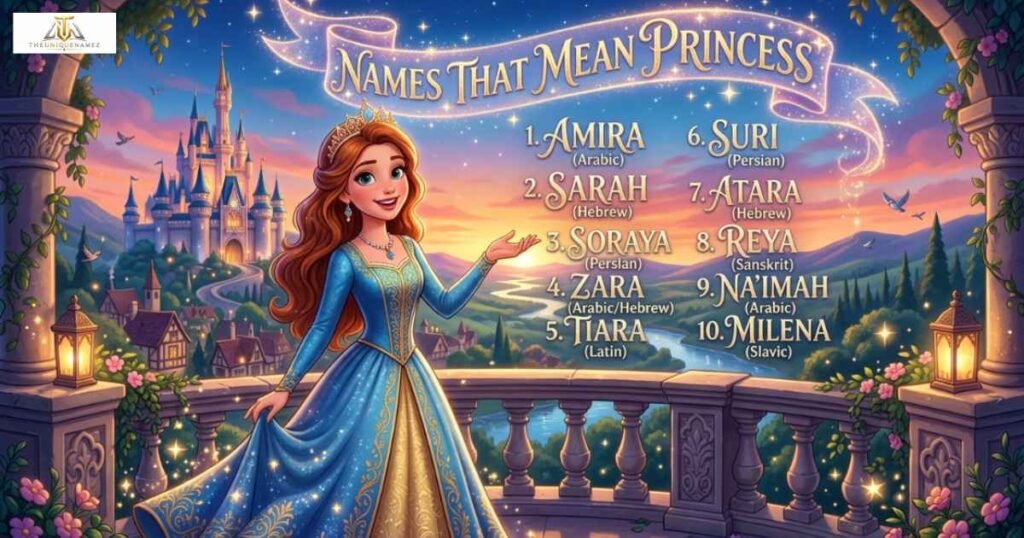
- Sarah — Pronunciation: SAIR-uh | Origin: Hebrew | Meaning: “Princess, noblewoman”
- Aaliyah — Pronunciation: ah-LEE-uh | Origin: Arabic | Meaning: “Exalted, high-born, princess-like”
- Amira — Pronunciation: ah-MEER-ah | Origin: Arabic | Meaning: “Princess, leader”
- Emira — Pronunciation: eh-MEER-ah | Origin: Arabic | Meaning: Variant of Amira, “female ruler”
- Sarrah — Pronunciation: SAH-rah | Origin: Arabic | Meaning: “Noblewoman”
- Malaika — Pronunciation: mah-LYE-kah | Origin: Swahili | Meaning: “Angel,” associated with royal grace
- Putri — Pronunciation: POO-tree | Origin: Indonesian/Malay | Meaning: “Princess, daughter”
- Ohanzee — Pronunciation: oh-HAHN-zee | Origin: Native American (Sioux) | Meaning: “Shadow,” used ceremonially in royal lineage
- Bimala — Pronunciation: bee-MAH-lah | Origin: Sanskrit | Meaning: “Pure,” associated with royal purity
- Rajkumari — Pronunciation: rahj-koo-MAH-ree | Origin: Sanskrit/Hindi | Meaning: “Princess”
- Shehzadi — Pronunciation: shay-ZAH-dee | Origin: Urdu | Meaning: “Princess”
- Zada — Pronunciation: ZAH-dah | Origin: Arabic | Meaning: “Fortunate, princess-born”
- Noor — Pronunciation: noor | Origin: Arabic | Meaning: “Light,” associated with royal jewels
- Yueyue — Pronunciation: yweh-YWEH | Origin: Chinese | Meaning: “Moon,” inspired by imperial naming traditions
- Areum — Pronunciation: ah-REUM | Origin: Korean | Meaning: “Beautiful,” linked to royal court traditions
- Ilse — Pronunciation: IL-suh | Origin: Germanic | Meaning: “Noble maiden”
- Adaeze — Pronunciation: ah-dah-EH-zeh | Origin: Igbo | Meaning: “Princess, daughter of a king”
- Ada — Pronunciation: AH-dah | Origin: Igbo/Germanic | Meaning: “First daughter”; also “noble”
- Chidinma — Pronunciation: chee-DEEN-mah | Origin: Igbo | Meaning: “God is good,” associated with royal families
- Omolara — Pronunciation: oh-moh-LAH-rah | Origin: Yoruba | Meaning: “Child born at the right time”
- Adaora — Pronunciation: ah-dah-OH-rah | Origin: Igbo | Meaning: “Daughter of the people”
- Sitara — Pronunciation: see-TAH-rah | Origin: Persian/Urdu | Meaning: “Star”
- Shahnaz — Pronunciation: shah-NAHZ | Origin: Persian | Meaning: “Pride of the king”
- Banafsha — Pronunciation: bah-nahf-SHAH | Origin: Persian | Meaning: “Violet flower”
- Zarina — Pronunciation: zah-REE-nah | Origin: Persian | Meaning: “Golden, princess”
- Camelia — Pronunciation: kuh-MEEL-yuh | Origin: Latin | Meaning: Flower name embraced by European nobility
- Precious — Pronunciation: PRESH-us | Origin: English | Meaning: Beloved child; often used affectionately for daughters
- Kumari — Pronunciation: koo-MAH-ree | Origin: Sanskrit/Nepali | Meaning: “Princess, young girl”
- Botum — Pronunciation: boh-TOOM | Origin: Khmer | Meaning: “Lotus,” associated with Cambodian royalty
- Reaksmey — Pronunciation: reeak-SMAY | Origin: Khmer | Meaning: “Sunlight,” a royal-lineage name
Arabic & Islamic Royal Baby Girl Names
Arabic and Islamic baby girl names are known for their elegance, deep spiritual meaning, and royal heritage.
Many of these names belong to respected women in Islamic history, while others symbolize queens, nobility, beauty, and grace, making them timeless choices for modern families.
- Aisha — Pronunciation: AH-ee-shah | Origin: Arabic | Meaning: “Lively”; wife of the Prophet Muhammad (PBUH)
- Maryam — Pronunciation: MAR-yam | Origin: Arabic | Meaning: “Mother of Prophet Isa (AS)”
- Zainab — Pronunciation: zay-NAB | Origin: Arabic | Meaning: “Fragrant flower”; daughter of the Prophet (PBUH)
- Fatima — Pronunciation: FAH-tee-mah | Origin: Arabic | Meaning: “Daughter of the Prophet (SAW)”
- Khadija — Pronunciation: kah-DEE-jah | Origin: Arabic | Meaning: “Wife of the Prophet (PBUH)”; early trader-noblewoman
- Zara — Pronunciation: ZAH-rah | Origin: Arabic | Meaning: “Princess, blooming flower”
- Asma — Pronunciation: AHS-mah | Origin: Arabic | Meaning: “Prestige, exalted”
- Hafsa — Pronunciation: HAHF-sah | Origin: Arabic | Meaning: “Young lioness”
- Nadia — Pronunciation: NAH-dee-ah | Origin: Arabic | Meaning: “Caller, one who calls out”
- Farah — Pronunciation: FAH-rah | Origin: Arabic | Meaning: “Happiness, joy”
- Rania — Pronunciation: RAH-nee-ah | Origin: Arabic | Meaning: “Gazer, queenly”
- Layla — Pronunciation: LAY-lah | Origin: Arabic | Meaning: “Night beauty”
- Yasmin — Pronunciation: YAHS-min | Origin: Persian/Arabic | Meaning: “Jasmine flower,” associated with Middle Eastern nobility
- Samira — Pronunciation: sah-MEER-ah | Origin: Arabic | Meaning: “Companion in evening talk”
- Nour — Pronunciation: noor | Origin: Arabic | Meaning: “Light”
- Basma — Pronunciation: BAHS-mah | Origin: Arabic | Meaning: “Smile”
- Bushra — Pronunciation: BOOSH-rah | Origin: Arabic | Meaning: “Glad tidings, good news”
- Iman — Pronunciation: ee-MAHN | Origin: Arabic | Meaning: “Faith, belief”
- Inaya — Pronunciation: ee-NAH-yah | Origin: Arabic | Meaning: “Care, protection”
- Hiba — Pronunciation: HEE-bah | Origin: Arabic | Meaning: “Gift”
- Jumana — Pronunciation: joo-MAH-nah | Origin: Arabic | Meaning: “Silver pearl”
- Lina — Pronunciation: LEE-nah | Origin: Arabic | Meaning: “Tender, delicate”
- Salma — Pronunciation: SAL-mah | Origin: Arabic | Meaning: “Peaceful, safe”
- Dania — Pronunciation: DAH-nee-ah | Origin: Arabic | Meaning: “Near, close by”
- Rima — Pronunciation: REE-mah | Origin: Arabic | Meaning: “White antelope,” a poetic royal-era symbol
- Sana — Pronunciation: SAH-nah | Origin: Arabic | Meaning: “Radiance, brilliance”
- Zoya — Pronunciation: ZOH-yah | Origin: Arabic/Russian | Meaning: “Loving and caring”
- Alishba — Pronunciation: ah-LEESH-bah | Origin: Arabic/Urdu | Meaning: “Beautiful, pretty”
- Hareem — Pronunciation: hah-REEM | Origin: Arabic | Meaning: “Respectable, sacred”
- Shazia — Pronunciation: SHAH-zee-ah | Origin: Arabic/Urdu | Meaning: “Princess, rare, exotic”
Indian & Sanskrit Royal Baby Girl Names
Indian and Sanskrit royal baby girl names are inspired by queens, goddesses, empresses, and centuries of royal tradition. These names blend beauty, spirituality, and regal symbolism, making them meaningful choices that have remained popular for generations.
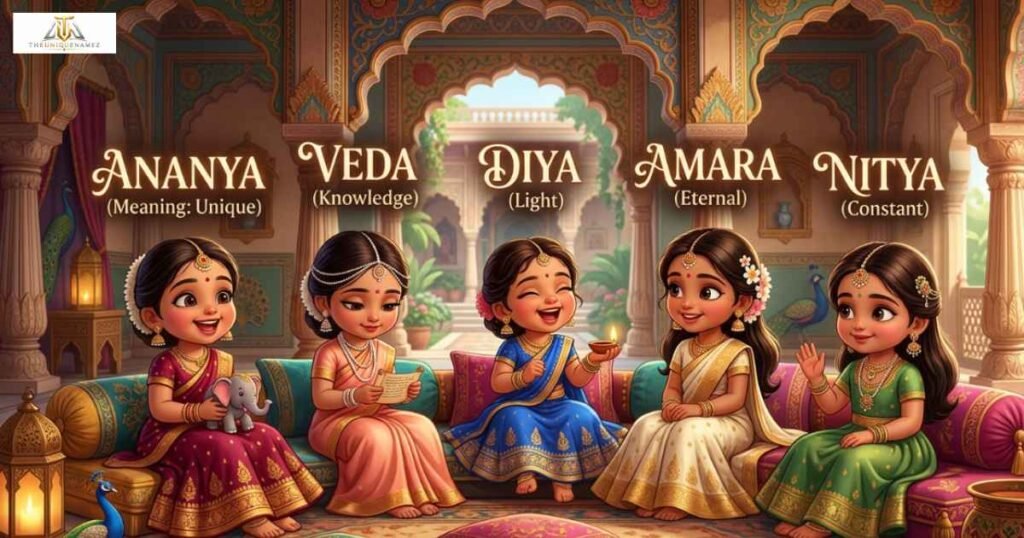
- Rani — Pronunciation: RAH-nee | Origin: Sanskrit | Meaning: “Queen”
- Maharani — Pronunciation: mah-hah-RAH-nee | Origin: Sanskrit | Meaning: “Great queen, empress”
- Rajkumari — Pronunciation: rahj-koo-MAH-ree | Origin: Sanskrit | Meaning: “Princess”
- Indira — Pronunciation: in-DEER-ah | Origin: Sanskrit | Meaning: “Beauty, splendor”; also a title of Goddess Lakshmi
- Kamala — Pronunciation: KAH-mah-lah | Origin: Sanskrit | Meaning: “Lotus,” a royal symbol of purity
- Padma — Pronunciation: PUD-mah | Origin: Sanskrit | Meaning: “Lotus,” associated with royal women
- Meera — Pronunciation: MEE-rah | Origin: Sanskrit | Meaning: “Prosperous, ocean of light”; historical royal poet-princess
- Devika — Pronunciation: DAY-vee-kah | Origin: Sanskrit | Meaning: “Little goddess”
- Amrita — Pronunciation: um-REE-tah | Origin: Sanskrit | Meaning: “Immortal, nectar of the gods”
- Anushka — Pronunciation: ah-NOOSH-kah | Origin: Sanskrit | Meaning: “Grace, favor”
- Aishwarya — Pronunciation: eye-SHWAR-yah | Origin: Sanskrit | Meaning: “Wealth, prosperity, royal splendor”
- Charumati — Pronunciation: chah-roo-MAH-tee | Origin: Sanskrit | Meaning: “Wise and beautiful”; a historical royal princess name
- Chandni — Pronunciation: CHAND-nee | Origin: Sanskrit/Hindi | Meaning: “Moonlight,” celebrated in Mughal royal poetry
- Mumtaz — Pronunciation: moom-TAHZ | Origin: Persian/Urdu | Meaning: “Distinguished, chosen”; Empress Mumtaz Mahal
- Noor Jahan — Pronunciation: noor jah-HAHN | Origin: Persian/Urdu | Meaning: “Light of the world”; Mughal empress-consort
- Jodha — Pronunciation: JOH-dah | Origin: Rajasthani | Meaning: Historical Rajput princess name
- Ratna — Pronunciation: RUT-nah | Origin: Sanskrit | Meaning: “Jewel,” associated with royal treasures
- Suvarna — Pronunciation: soo-VAR-nah | Origin: Sanskrit | Meaning: “Golden”
- Tara — Pronunciation: TAH-rah | Origin: Sanskrit | Meaning: “Star,” a title used for royal and divine women
- Uma — Pronunciation: OO-mah | Origin: Sanskrit | Meaning: “Tranquility”; name of a goddess-queen
- Vidya — Pronunciation: VID-yah | Origin: Sanskrit | Meaning: “Knowledge,” honored in royal courts
- Yashoda — Pronunciation: yah-SHOH-dah | Origin: Sanskrit | Meaning: “One who brings glory”
- Chitra — Pronunciation: CHIT-rah | Origin: Sanskrit | Meaning: “Bright, distinguished”
- Divya — Pronunciation: DIV-yah | Origin: Sanskrit | Meaning: “Divine, heavenly”
- Kiran — Pronunciation: KEER-un | Origin: Sanskrit | Meaning: “Ray of light”
- Lavanya — Pronunciation: lah-VUN-yah | Origin: Sanskrit | Meaning: “Grace, beauty”
- Manisha — Pronunciation: mah-NEE-shah | Origin: Sanskrit | Meaning: “Intelligence, wisdom”
- Nandini — Pronunciation: NUN-dee-nee | Origin: Sanskrit | Meaning: “Daughter who brings joy”
- Shanta — Pronunciation: SHAHN-tah | Origin: Sanskrit | Meaning: “Calm, peaceful”
- Vasundhara — Pronunciation: vah-soon-DHAH-rah | Origin: Sanskrit | Meaning: “Daughter of the earth,” a royal-goddess title
Historical Queens & Empresses Regnant
Names inspired by famous queens and empresses are perfect for parents who want a baby name with real historical significance. These names belonged to powerful women who ruled kingdoms and empires, giving them a timeless sense of strength, leadership, and elegance.
- Cleopatra — Pronunciation: klee-oh-PAT-rah | Origin: Greek/Egyptian | Meaning: “Glory of the father”; Cleopatra VII of Egypt
- Nefertiti — Pronunciation: nef-er-TEE-tee | Origin: Ancient Egyptian | Meaning: “The beautiful one has come”; Egyptian queen-consort
- Boudica — Pronunciation: BOO-dih-kah | Origin: Celtic | Meaning: “Victory”; warrior-queen of the Iceni
- Zenobia — Pronunciation: zeh-NOH-bee-ah | Origin: Aramaic/Greek | Meaning: “Life of Zeus”; Queen of Palmyra
- Semiramis — Pronunciation: seh-MEER-ah-mis | Origin: Assyrian/Greek | Meaning: Legendary warrior-queen of Assyria
- Christina — Pronunciation: kris-TEE-nah | Origin: Greek | Meaning: “Follower of Christ”; Queen Christina of Sweden
- Isabeau — Pronunciation: ee-zah-BOH | Origin: French | Meaning: “God is my oath”; Isabeau of Bavaria
- Jadwiga — Pronunciation: yad-VEE-gah | Origin: Polish | Meaning: Queen regnant of Poland
- Tamar — Pronunciation: TAH-mar | Origin: Georgian/Hebrew | Meaning: “Palm tree”; Queen Tamar of Georgia
- Wilhelmina — Pronunciation: vil-hel-MEE-nah | Origin: Dutch | Meaning: “Resolute protector”; Queen Wilhelmina of the Netherlands
- Margrethe — Pronunciation: mar-GRAY-tuh | Origin: Danish | Meaning: “Pearl”; Queen Margrethe II of Denmark
- Suiko — Pronunciation: soo-EE-koh | Origin: Japanese | Meaning: First reigning empress of Japan
- Wu — Pronunciation: woo | Origin: Chinese | Meaning: Empress Wu Zetian, the only female emperor of China
- Trung Trac — Pronunciation: troong-trak | Origin: Vietnamese | Meaning: Legendary co-queen who led a Vietnamese uprising
- Ranavalona — Pronunciation: rah-nah-vah-LOH-nah | Origin: Malagasy | Meaning: Queens regnant of Madagascar
- Njinga — Pronunciation: n-JEEN-gah | Origin: Kimbundu | Meaning: Queen of Ndongo and Matamba, Angola
- Amina — Pronunciation: ah-MEE-nah | Origin: Hausa | Meaning: Warrior-queen of Zazzau, Nigeria
- Yaa Asantewaa — Pronunciation: yah ah-sahn-TEH-wah | Origin: Akan | Meaning: Queen Mother who led the Ashanti resistance
- Sondok — Pronunciation: son-DOHK | Origin: Korean | Meaning: Queen Seondeok of Silla, the first reigning queen of Korea
- Lili’uokalani — Pronunciation: lee-lee-oo-oh-kah-LAH-nee | Origin: Hawaiian | Meaning: Last reigning monarch of the Kingdom of Hawaii
- Ka’iulani — Pronunciation: kah-ee-oo-LAH-nee | Origin: Hawaiian | Meaning: “The royal sacred one”; Hawaiian crown princess
- Pomare — Pronunciation: poh-MAH-ray | Origin: Tahitian | Meaning: Queen regnant name of Tahiti
- Salote — Pronunciation: sah-LOH-teh | Origin: Tongan | Meaning: Queen Sālote Tupou III of Tonga
- Kahina — Pronunciation: kah-HEE-nah | Origin: Berber | Meaning: Legendary Berber warrior-queen
- Artemisia — Pronunciation: ar-teh-MEE-zhah | Origin: Greek | Meaning: Queen and naval commander of Halicarnassus
- Berenice — Pronunciation: bair-eh-NEE-chay | Origin: Greek | Meaning: “Bringer of victory”; several Ptolemaic queens
- Theodora — Pronunciation: thee-oh-DOR-ah | Origin: Greek | Meaning: “Gift of God”; Byzantine empress
- Irene — Pronunciation: eye-REEN | Origin: Greek | Meaning: “Peace”; Byzantine empress regnant
- Urraca — Pronunciation: oo-RAH-kah | Origin: Spanish | Meaning: Queen regnant of León and Castile
- Matilda of Tuscany — Pronunciation: muh-TIL-duh | Origin: Germanic/Italian | Meaning: Powerful medieval margravine and ruler
Other Beautiful Baby Girl And Boy Names
If you love meaningful baby names, Names That Mean Pure are an excellent choice for both girls and boys. These names often symbolize innocence, honesty, kindness, and a fresh beginning. Many cultures, including Latin, Greek, Irish, and Sanskrit, offer beautiful names with this timeless meaning. Parents choose these names to reflect positive values and lasting character. Whether you prefer a classic or modern option, pure-inspired names remain elegant and meaningful. They are perfect for families seeking a name with spiritual and emotional significance. Their gentle meanings make them popular across generations.
Another inspiring category is Names That Mean Helper, ideal for parents who value compassion and generosity. These names represent support, service, protection, and kindness toward others. Found in Hebrew, Arabic, Celtic, and English traditions, they carry strong yet heartwarming meanings. Many helper-inspired names have deep historical and religious roots. They suit both boys and girls and reflect qualities of leadership and empathy. Choosing a name that means helper can symbolize a caring personality and a willingness to make a positive difference. These meaningful names continue to grow in popularity.
Nature lovers may also appreciate Green Names for Boys, which are inspired by forests, plants, and the beauty of the earth. These names symbolize growth, renewal, peace, and a strong connection to nature. Many green-themed names have Celtic, English, and Scandinavian origins, making them both unique and timeless. They are perfect for parents seeking fresh, earthy, and adventurous baby names. Whether inspired by trees, leaves, or vibrant landscapes, these names celebrate the natural world. Green-inspired names also reflect balance, hope, and new beginnings. They offer a distinctive choice with lasting appeal.
Mythological Royal & Goddess-Queen Names
Mythological royal names are filled with timeless stories of queens, goddesses, and legendary rulers from cultures around the world. These names combine beauty, power, and symbolism, making them ideal for parents seeking a meaningful and majestic name.

- Hera — Pronunciation: HAIR-uh | Origin: Greek | Meaning: Queen of the Greek gods
- Freya — Pronunciation: FRAY-uh | Origin: Norse | Meaning: Goddess associated with love and war, of noble status
- Isis — Pronunciation: EYE-sis | Origin: Egyptian | Meaning: Goddess-queen and protector of the throne
- Persephone — Pronunciation: per-SEF-oh-nee | Origin: Greek | Meaning: Queen of the Underworld
- Athena — Pronunciation: uh-THEE-nuh | Origin: Greek | Meaning: Goddess of wisdom and patroness of a city-state
- Juno — Pronunciation: JOO-noh | Origin: Roman | Meaning: Queen of the Roman gods
- Rhea — Pronunciation: REE-uh | Origin: Greek | Meaning: “Titan queen,” mother of the Olympian gods
- Frigg — Pronunciation: frig | Origin: Norse | Meaning: Queen of Asgard
- Lakshmi — Pronunciation: LUCK-shmee | Origin: Sanskrit | Meaning: Goddess of prosperity, often portrayed as a royal consort
- Parvati — Pronunciation: PAR-vah-tee | Origin: Sanskrit | Meaning: Goddess-consort associated with royal devotion
- Guinevere — Pronunciation: GWIN-uh-veer | Origin: Welsh | Meaning: “White phantom, fair one”; legendary Queen of Camelot
- Titania — Pronunciation: tih-TAH-nee-uh | Origin: Latin/Literary | Meaning: Queen of the fairies in Shakespeare
- Morgana — Pronunciation: mor-GAH-nah | Origin: Welsh | Meaning: Enchantress from Arthurian legend
- Andromeda — Pronunciation: an-DROM-eh-dah | Origin: Greek | Meaning: Mythical princess and later a constellation
- Ariadne — Pronunciation: air-ee-AD-nee | Origin: Greek | Meaning: Cretan princess of legend
- Dido — Pronunciation: DYE-doh | Origin: Phoenician | Meaning: Legendary Queen of Carthage
- Brigid — Pronunciation: BRIJ-id | Origin: Irish | Meaning: Goddess associated with sovereignty in Celtic mythology
- Danu — Pronunciation: DAH-noo | Origin: Irish | Meaning: Mother-goddess of the Tuatha Dé Danann
- Xochitl — Pronunciation: SHO-cheel | Origin: Nahuatl | Meaning: “Flower,” a name associated with Aztec nobility
- Terasu — Pronunciation: teh-RAH-soo | Origin: Japanese | Meaning: Associated with the sun goddess and imperial ancestry
- Nike — Pronunciation: NY-kee | Origin: Greek | Meaning: Winged goddess of victory
- Selene — Pronunciation: seh-LEE-nee | Origin: Greek | Meaning: Moon goddess
- Circe — Pronunciation: SUR-see | Origin: Greek | Meaning: Sorceress-queen of Aeaea
- Calypso — Pronunciation: kuh-LIP-soh | Origin: Greek | Meaning: Island nymph-queen
- Maeve — Pronunciation: mayv | Origin: Irish | Meaning: “She who intoxicates”; legendary Irish warrior-queen
- Branwen — Pronunciation: BRAN-wen | Origin: Welsh | Meaning: “Blessed raven”; legendary Welsh princess
- Eos — Pronunciation: EE-oss | Origin: Greek | Meaning: Goddess of the dawn
- Nyx — Pronunciation: niks | Origin: Greek | Meaning: Primordial goddess of night
- Ishtar — Pronunciation: ISH-tar | Origin: Mesopotamian | Meaning: Queen-goddess of love and war
- Astarte — Pronunciation: as-TAR-tee | Origin: Phoenician | Meaning: Royal goddess of fertility and war
Virtue & Gemstone Names Fit for Royalty
Virtue and gemstone Royal Beautiful Baby Girl Names names have long been associated with elegance, nobility, and timeless beauty. Inspired by precious jewels and admirable qualities, these names offer a graceful, regal feel while remaining easy to pronounce and meaningful for modern families.
- Grace — Pronunciation: grayss | Origin: Latin | Meaning: “Elegance, divine favor”; Princess Grace of Monaco
- Pearl — Pronunciation: perl | Origin: English | Meaning: Gemstone associated with royal jewelry
- Ruby — Pronunciation: ROO-bee | Origin: English | Meaning: Gemstone symbolizing passion and status
- Opal — Pronunciation: OH-pul | Origin: Sanskrit/English | Meaning: Gemstone associated with royal treasures
- Jewel — Pronunciation: JOO-uhl | Origin: English | Meaning: Direct reference to royal adornment
- Margarita — Pronunciation: mar-gah-REE-tah | Origin: Greek/Latin | Meaning: “Pearl”; root of Margaret
- Esmeralda — Pronunciation: ez-meh-RAHL-dah | Origin: Spanish | Meaning: “Emerald”
- Coral — Pronunciation: KOR-uhl | Origin: English | Meaning: Gemstone and nature name associated with nobility
- Amber — Pronunciation: AM-ber | Origin: English | Meaning: Gemstone prized by royal courts
- Ivory — Pronunciation: EYE-vor-ee | Origin: English | Meaning: Material associated with royal thrones
- Crystal — Pronunciation: KRIS-tuhl | Origin: English | Meaning: Gemstone symbolizing clarity
- Beryl — Pronunciation: BEH-ril | Origin: Greek | Meaning: Gemstone historically worn by nobility
- Garnet — Pronunciation: GAR-nit | Origin: English | Meaning: Deep-red gemstone favored by medieval royalty
- Jade — Pronunciation: jayd | Origin: Spanish | Meaning: Gemstone treasured by Chinese imperial families
- Topaz — Pronunciation: TOH-paz | Origin: Sanskrit | Meaning: Gemstone associated with royal collections
- Faith — Pronunciation: fayth | Origin: English | Meaning: Virtue name popular among European nobility
- Gracehope — Pronunciation: Not applicable | Origin: English | Meaning: Modern compound virtue name
- Honor — Pronunciation: ON-er | Origin: English | Meaning: Virtue name signifying nobility of character
- True — Pronunciation: troo | Origin: English | Meaning: Virtue name representing sincerity
- Verity — Pronunciation: VEH-rih-tee | Origin: Latin | Meaning: “Truth”
- Clemency — Pronunciation: KLEH-men-see | Origin: Latin | Meaning: “Mercy,” a queenly virtue
- Felicity — Pronunciation: fuh-LIS-uh-tee | Origin: Latin | Meaning: “Happiness,” used by Roman noblewomen
- Serenity — Pronunciation: seh-REN-uh-tee | Origin: Latin | Meaning: “Calm, peaceful”
- Purity — Pronunciation: PYOOR-uh-tee | Origin: English | Meaning: Virtue name from the Puritan era
- Charity — Pronunciation: CHAIR-uh-tee | Origin: Latin | Meaning: Virtue name embraced by European aristocracy
- Modesty — Pronunciation: MOD-uh-stee | Origin: Latin | Meaning: Virtue valued in royal courts
- Constance — Pronunciation: KON-stans | Origin: Latin | Meaning: “Steadfastness”; borne by several medieval queens
- Prudence — Pronunciation: PROO-dens | Origin: Latin | Meaning: “Wisdom, good judgment”
- Temperance — Pronunciation: TEM-per-ans | Origin: Latin | Meaning: “Self-restraint,” a royal virtue
- Amethyst — Pronunciation: AM-uh-thist | Origin: Greek | Meaning: Purple gemstone traditionally worn in royal crowns
Modern International Royal Beautiful Baby Girl Names
Modern royal families continue to inspire baby naming trends with elegant, timeless choices that balance tradition and contemporary style. These names belong to real princesses and young royals from Europe, the Middle East, and Asia, making them stylish yet meaningful options for today’s parents.
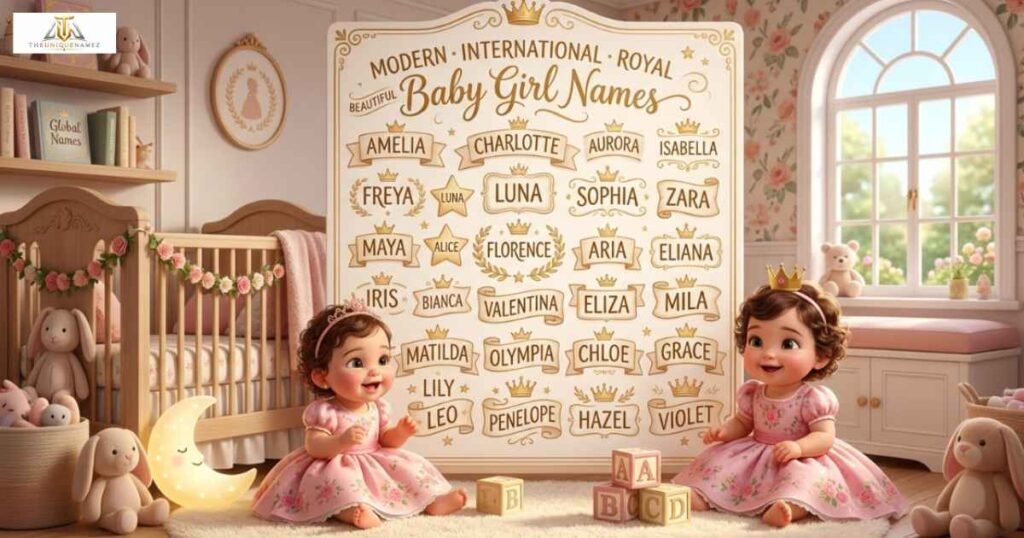
- Charlotte — Pronunciation: SHAR-lut | Origin: French/German | Meaning: Princess Charlotte of Wales (born 2015)
- Lilibet — Pronunciation: LIL-ih-bet | Origin: English | Meaning: Family nickname for Elizabeth; used for Lilibet Diana Mountbatten-Windsor
- Estelle — Pronunciation: es-TEL | Origin: French | Meaning: Princess Estelle of Sweden (born 2012)
- Leonor — Pronunciation: lay-oh-NOR | Origin: Spanish | Meaning: Princess of Asturias (born 2005)
- Sofía — Pronunciation: soh-FEE-ah | Origin: Spanish | Meaning: Infanta Sofía of Spain (born 2007)
- Ingrid Alexandra — Pronunciation: ING-grid al-eg-ZAN-drah | Origin: Norwegian | Meaning: Princess of Norway (born 2004)
- Isabella — Pronunciation: iz-uh-BEL-uh | Origin: Spanish/Hebrew | Meaning: Princess Isabella of Denmark (born 2007)
- Josephine — Pronunciation: JOE-zeh-feen | Origin: French | Meaning: Princess Josephine of Denmark (born 2011)
- Athena — Pronunciation: uh-THEE-nuh | Origin: Greek | Meaning: Princess Athena of Denmark (born 2012)
- Alexia — Pronunciation: uh-LEK-see-uh | Origin: Greek | Meaning: Princess Alexia of the Netherlands (born 2005)
- Ariane — Pronunciation: ah-ree-AHN | Origin: French | Meaning: Princess Ariane of the Netherlands (born 2007)
- Elisabeth — Pronunciation: eh-LIZ-uh-beth | Origin: Dutch/Belgian | Meaning: Princess Elisabeth, Duchess of Brabant (born 2001)
- Eleonore — Pronunciation: ay-lay-oh-NOR | Origin: Belgian/French | Meaning: Princess Eléonore of Belgium (born 2008)
- Gabriella — Pronunciation: gab-ree-EL-uh | Origin: Italian | Meaning: Princess Gabriella of Monaco (born 2014)
- Alexandra of Luxembourg — Pronunciation: al-eg-ZAN-drah | Origin: Greek | Meaning: Princess Alexandra of Luxembourg
- Amalia — Pronunciation: ah-MAH-lee-ah | Origin: Germanic | Meaning: Princess of Orange and heir to the Dutch throne
- Alia — Pronunciation: AH-lee-ah | Origin: Arabic | Meaning: Princess Alia bint Hussein of Jordan
- Iman — Pronunciation: ee-MAHN | Origin: Arabic | Meaning: Princess Iman bint Abdullah II of Jordan
- Salma — Pronunciation: SAL-mah | Origin: Arabic | Meaning: Princess Salma bint Abdullah II of Jordan
- Raiyah — Pronunciation: RYE-yah | Origin: Arabic | Meaning: Princess Raiyah bint Al Hussein of Jordan
- Hessa — Pronunciation: HESS-ah | Origin: Arabic | Meaning: Prominent name in the UAE royal family
- Latifa — Pronunciation: lah-TEE-fah | Origin: Arabic | Meaning: Well-known name in the UAE royal family
- Aiko — Pronunciation: EYE-koh | Origin: Japanese | Meaning: Princess Aiko of Japan (born 2001)
- Mako — Pronunciation: MAH-koh | Origin: Japanese | Meaning: Former Princess Mako of Akishino
- Kako — Pronunciation: KAH-koh | Origin: Japanese | Meaning: Princess Kako of Akishino
- Bajrakitiyabha — Pronunciation: Not applicable | Origin: Thai | Meaning: Princess Bajrakitiyabha of Thailand
- Sirivannavari — Pronunciation: see-ree-vahn-nah-VAH-ree | Origin: Thai | Meaning: Princess Sirivannavari Nariratana of Thailand
- Chulabhorn — Pronunciation: choo-lah-BORN | Origin: Thai | Meaning: Princess Chulabhorn of Thailand
How to Choose the Right Royal Beautiful Baby Girl Names for Your Daughter
After working through hundreds of parent naming consultations over the years, I’ve found the easiest way to narrow this list is to pick one category first British classic, mythological, gemstone, or global “queen/princess” translation rather than trying to compare all 250+ names against each other at once.
From there, say the full name (first, middle, and last) out loud, check the initials don’t spell anything unfortunate, and consider how the name will sound at every age, from nursery to boardroom.
It’s also worth checking a name’s current popularity ranking in your country before finalizing it. A name like Charlotte or Isabella is beautiful but currently very common in several English-speaking countries, while names like Zenobia or Kunigunde offer the same royal weight with far more rarity.
Conclusion
A royal beautiful baby girl names gives your daughter a built-in story whether that’s a tribute to a real queen, a name that simply means royalty, or a nod to mythology. With over 250 options spanning British, European, Arabic, Indian, mythological, and modern royal traditions.
There’s a regal name here for nearly any style or heritage. Bookmark this guide, share it with your partner or family, and take your time the right name is worth the search.
FAQs
What Baby Girl Name means “Queen”?
Several names translate directly to “queen,” including Regina (Latin), Malka (Hebrew), Malika (Arabic), Rani (Sanskrit), and Raina (Slavic). Each comes from a different language but carries the identical core meaning.
What is the Most Royal Baby Girl Name?
Elizabeth is widely considered the most royal baby girl name, having been worn by two reigning British queens across more than 500 combined years, along with numerous European princesses. Victoria and Charlotte are close runners-up.
What names have the British Royal Family used for Baby Girls?
Recent British royal baby girl names include Charlotte, Lilibet, and historically Elizabeth, Anne, Diana, Margaret, Beatrice, and Eugenie spanning several generations of the House of Windsor.
Are Royal Baby Names still Popular Today?
Yes, Naming researchers have documented a measurable “royal baby effect,” where names used by real-life royals such as Charlotte after Princess Charlotte’s 2015 birth see a noticeable rise in national birth registries for several years afterward.
What Baby Name Means “Princess” in different Languages?
Sarah and Aaliyah both trace to Hebrew/Arabic roots meaning “princess” or “noblewoman,” while Amira (Arabic), Putri (Indonesian/Malay), and Rajkumari (Sanskrit) all translate directly to “princess” in their respective languages.

Sahiba Bibi is the lead content writer at TheUniqueNamez.com, where she creates well-researched and SEO-optimized content about baby names, team names, usernames, nicknames, , group names, and team naming ideas. Her goal is to help readers discover meaningful, unique, and trending names with clear explanations and practical inspiration.